
How to onboard new dog walking clients
A repeatable onboarding (meet and greet, the right details collected, policies agreed before the first walk) decides how easy a client is for the next three years.
Onboarding decides everything later
Almost every awkward client conversation (the surprise cancellation fee, the “I thought you had a key”, the unpaid invoice) traces back to something not covered in week one. A repeatable onboarding is not bureaucracy; it is buying yourself years of smooth Tuesdays.
The meet and greet
Do it before committing, at the client's home, with the dog. You are assessing three things: the dog (recall, lead manners, reactivity, how they are with other dogs if you group walk), the logistics (parking, access, where the lead and towels live) and the client (are expectations realistic?). Keep it to a scheduled half hour: it is a meeting, not a free behaviour consultation.
Collect the details you'll need at 8:55 on a Tuesday
- Vet name, practice and phone number, plus authorisation to seek treatment in an emergency.
- Emergency contact who is not the client.
- Access: keys, codes, alarm quirks, which gate, where the dog waits.
- The dog: medical conditions, medication, food rules, fears, no-go areas, off-lead permission in writing.
- Billing: rate agreed, billing rhythm, payment method.
Policies before the first walk, not after the first problem
Send your cancellation policy, billing rhythm and holiday notice rule in the welcome message and get a simple written acceptance. Every policy is easy to agree to in week one and awkward to introduce in week twelve. A client agreement, even a one-pager, turns “I never agreed to that” into a non-event.
Start with a trial period
Frame the first two weeks as a trial in both directions. It gives you a graceful exit if the dog does not suit your group, and it makes the client's commitment feel low-risk. Most trials convert; the ones that do not were the ones worth catching early.
The first invoice sets the tone
Send it exactly when you said you would, itemised per walk, with a payment link. A crisp first invoice teaches the client that billing here is predictable and effortless, which is precisely the reputation that gets invoices paid on time for years.
How BearWalk helps
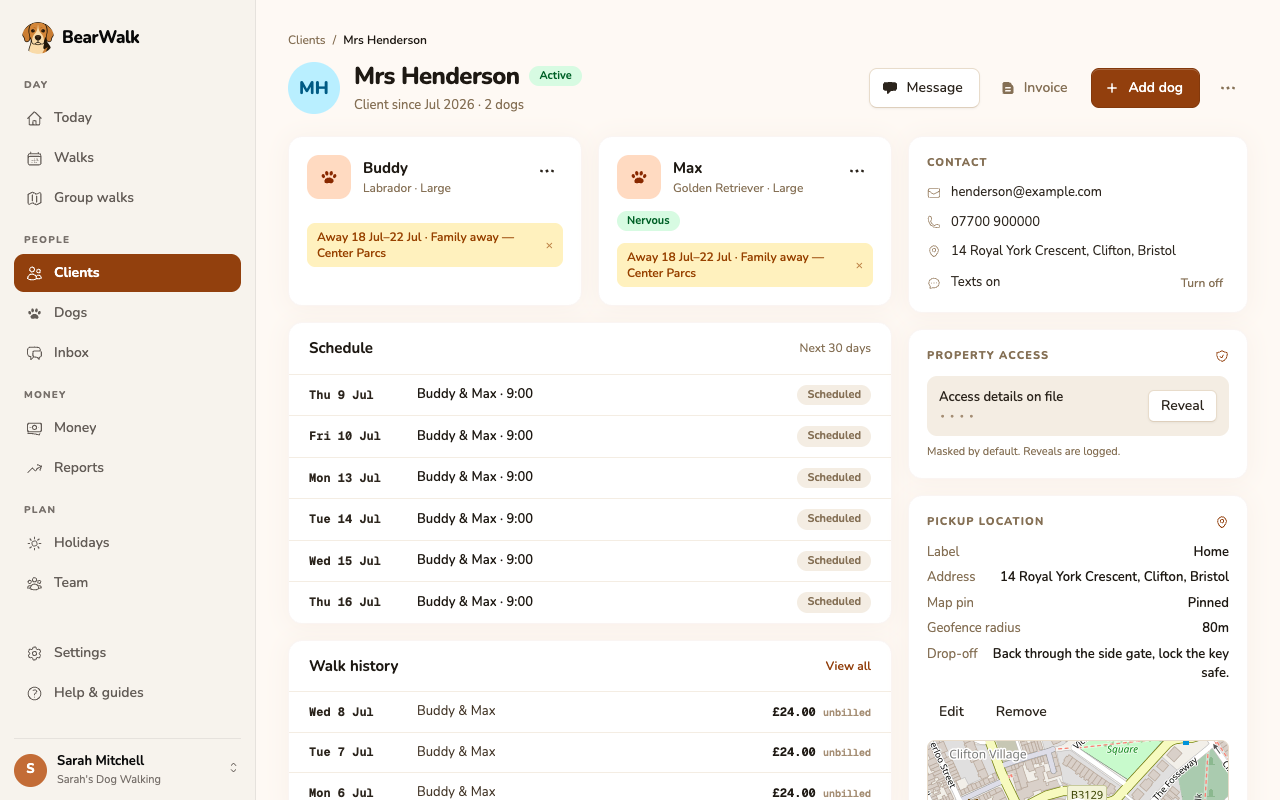
BearWalk keeps the whole onboarding on the client record: dogs with their quirks and vet details, access notes that stay masked until needed, agreed pricing, the billing cycle and your policy acceptance. From there the recurring schedule, the invoices and the client portal all run from the same facts you collected on day one.
FAQ
Should the meet and greet be free?
Yes. Treat it as sales time, but keep it scheduled and time-boxed so it does not become recurring free consultancy.
How should I handle client keys?
Tag keys with a code, never an address; record who holds which key; and put key handling in your agreement. Clients hand over their house. This is where professionalism is most visible.
What if the dog isn't right for group walks?
Say so at the trial stage and offer solo walks at the solo rate if you have capacity. A wrong dog in a group costs you the group.